
The “ah-ha” moment came during a conversation in London’s SkyBar during a break at a 2015 investment conference.
On the heels of a first-ever conference tackling the emerging and dangerous issue of trade-based money laundering (TBML), the U.S. Senate Financial Services and General Government Appropriations Committee has earmarked $2 million in assessment funding for FY 2020.
Nearly 100 years ago Oxford University began a degree program that combined the study of philosophy, political science, and economics—PPE for short. The idea was to create a course of study that included elements of traditional classical education with subjects that would be immediately applicable to the contemporary world.
Marisol Maddox spent three weeks this summer aboard a U.S. Coast Guard icebreaker traveling inside the Arctic Circle. She was prepared for minus-20-with-wind-chill temperatures and brisk 20-plus-hours-a-day sunshine, but the cold temperatures never came.
U.S. Senator Bill Cassidy, M.D. (R-La.) will deliver a keynote address tackling international trade-based money laundering, an issue that, Cassidy said, “is America’s biggest national security threat that almost no one is paying attention to.”
A Schar School study released earlier this year drew national attention, and for good reason: The research examined the rates of innovation by immigrants in the U.S. and found that native-born entrepreneurs were, in effect, being demolished by their immigrant-owned competition.
The rapidly expanding fields of blockchain and cryptocurrencies will be examined in depth by policymakers, industry executives, and academic leaders during an international, two-day symposium at the Schar School of Policy and Government.
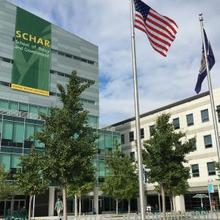
About 100 academics, practitioners, students, and pollsters attending this week’s 115th American Political Science Association’s meeting in Washington, D.C., were treated to a day-long “pre-conference” seminar on migration and citizenship, sponsored by the Schar School of Policy and Government and its Center for the Study of Social Change, Institutions and Policy. The program was chaired by Associate Professor Justin Gest.
An audience of 140 community and business leaders and curious citizens attended a Monday morning (August 26) program called Northern Virginia Regional Elected Leaders Summit, held at George Mason University’s Van Metre Hall in Arlington.
Foreign trade and strategic domestic investments are vital issues in South America as the region looks to compete in global markets with powerful competitors, including China, Russia, and the U.S.