 April 28, 2021
Illegal goods can have deadly consequences. Whether it’s a counterfeit face mask that doesn’t provide a frontline worker adequate protection from COVID-19, or a counterfeit pill laced with fentanyl (a synthetic painkiller 50-100 times more potent than morphine), millions of lives can be at risk.
A multidisciplinary team of researchers and students at George Mason University is working to stop such criminal activity. Thanks to a nearly $650,000 grant from the National Science Foundation (NSF)—and a $16,000 grant supplement awarded to two undergraduates on the team—they will be investigating how to disrupt illicit supply chains, influence policy, and ultimately save lives.
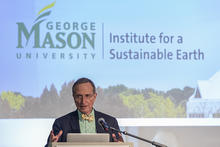
George Mason University’s Thomas Lovejoy was elected to the National Academy of Sciences this week, joining an elite group of 120 scholars recognized this year for their contributions to science and research.
Mason faculty, staff, students, contractors, and their families and friends can register to receive their first dose of Pfizer’s COVID-19 vaccine on Wednesday, April 28 at Mason’s EagleBank Arena in Fairfax, VA.
Retired Army Lt. Col. Alexander Vindman discusses ethical dilemmas in pulic service
-
George Mason University has begun administering COVID-19 vaccinations to students.

First Lady Jill Biden will be George Mason University’s Commencement speaker next month, headlining the May 14 virtual event honoring nearly 9,700 graduates.
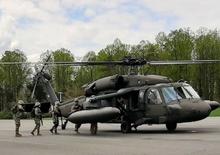
Mason cadets fly to Marine Corps Base Quantico to complete a simulated military mission.
George Mason University is offering two COVID-19 vaccination clinics this week for students on Wednesday, April 21 and Friday, April 23.
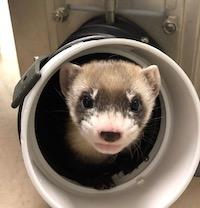
Black-footed ferrets were once thought to be extinct, until a small population was discovered in Wyoming in 1981. The species is still endangered, but scientists—including a George Mason University researcher and students at the Smithsonian-Mason School of Conservation (SMSC)—are coming to the rescue.
In December 2020, Willa, a black-footed ferret who died in 1988, was cloned using her cells that had been frozen. That clone, Elizabeth Ann, is now the first North American endangered species to be cloned in the United States. Senior Research Scientist Klaus-Peter Koepfli conducted critical research on her genetic cell line.