
 January 13, 2026
The National Institutes of Health (NIH) awarded a George Mason University research team $2.1 million to create a nanosensor and imaging technique that could revolutionize the study of seizures.
 January 12, 2026
A study published in the prestigious Proceedings of the National Academy of Sciences validates a decades-old hypothesis by Nobel laureate Francis Crick, with key computational work performed by researchers at George Mason University.
 January 12, 2026
The third in a three-part series about George Mason's participation in the CCI NoVa Node. This entry is on research.
 January 12, 2026
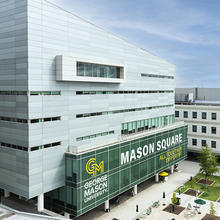
Research from the Steven S. Fuller Institute—based on figures from the federal government—indicates the Washington, D.C., region lost nearly 53,000 federal jobs lost last year. The effects could be long lasting.
 January 9, 2026
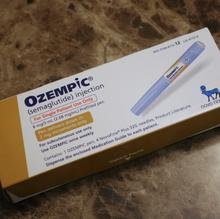
The Department of Nutrition and Food Studies was chosen as one of six trial sites for its expertise in obesity and weight loss.
 January 7, 2026
How employees respond to being under surveillance depends on a number of factors, including how good they are at their jobs.
 December 11, 2025
As the use of underwater, aerial, and unmanned ground vehicles continues to grow, it is critical that the fuel cells necessary to power these systems operate safely, while providing durable and optimal performance. High-performance hydrogen sensors, which monitor leakage, energy efficiency, and durability under a wide range of operating conditions, are key to this function.
 December 11, 2025
New research from George Mason researcher Raedeh Basiri, a precision nutrition expert, identifies associations between dietary patterns, glycemic status, diabetes control, and sleep outcomes.
 November 25, 2025
Sue Slocum, professor in the Tourism and Events Management Program at George Mason University, received a Fulbright Specialist Program award in support of a project on how best to prepare students for jobs in Tajikistan’s tourism economy. She went for a month to advise and collaborate with faculty from the International University of Tourism and Entrepreneurship of Tajikistan.
 November 18, 2025
This month, a new Northern Virginia International Soft-Landing Accelerator (NISA) program, designed to help start-ups from around the globe find guidance, connections, and lab or office spaces at no cost, was launched to help develop new technologies in life sciences.